
Supporting post-partum mothers with a connected wellness ecosystem

Role + Team
Mobile App Design lead; 7 designers, 4 researchers, 2 PMs, 20 engineers
Client
Honda's Research Institute's 99P Labs x Carnegie Mellon University
Project Goal
Harness LLMs, sensors, and connected environments to build a platform supporting holistic post-partum care
Fourth Trimester Health (fth) is an agentic wellness platform built for post-partum mothers on behalf of Honda's 99P Research Labs.
I collaborated with 30 teammates across hardware engineering, intelligence engineering, and HCI to build a mix of digital and hardware solutions that worked in tandem to improve health outcomes.
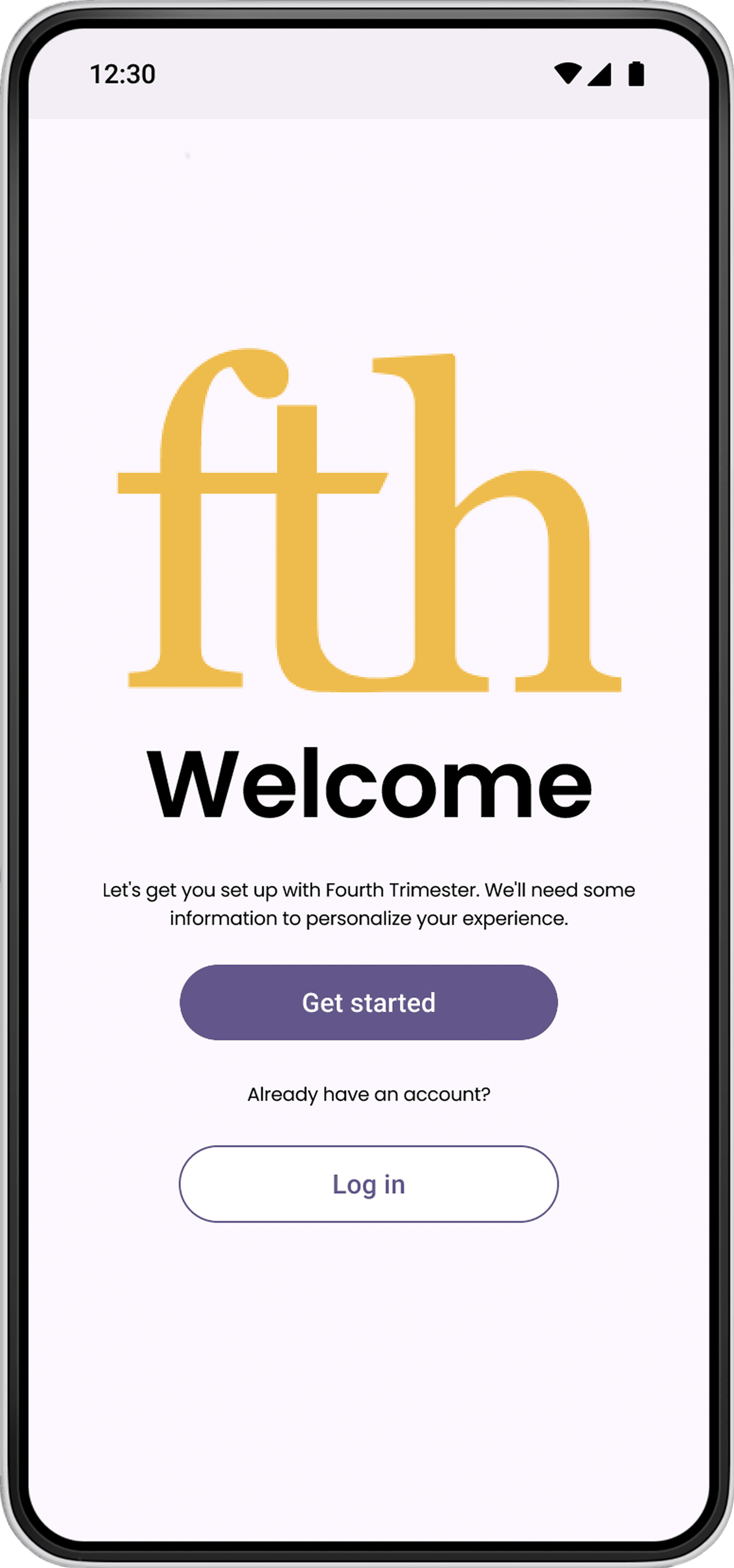
Patient App
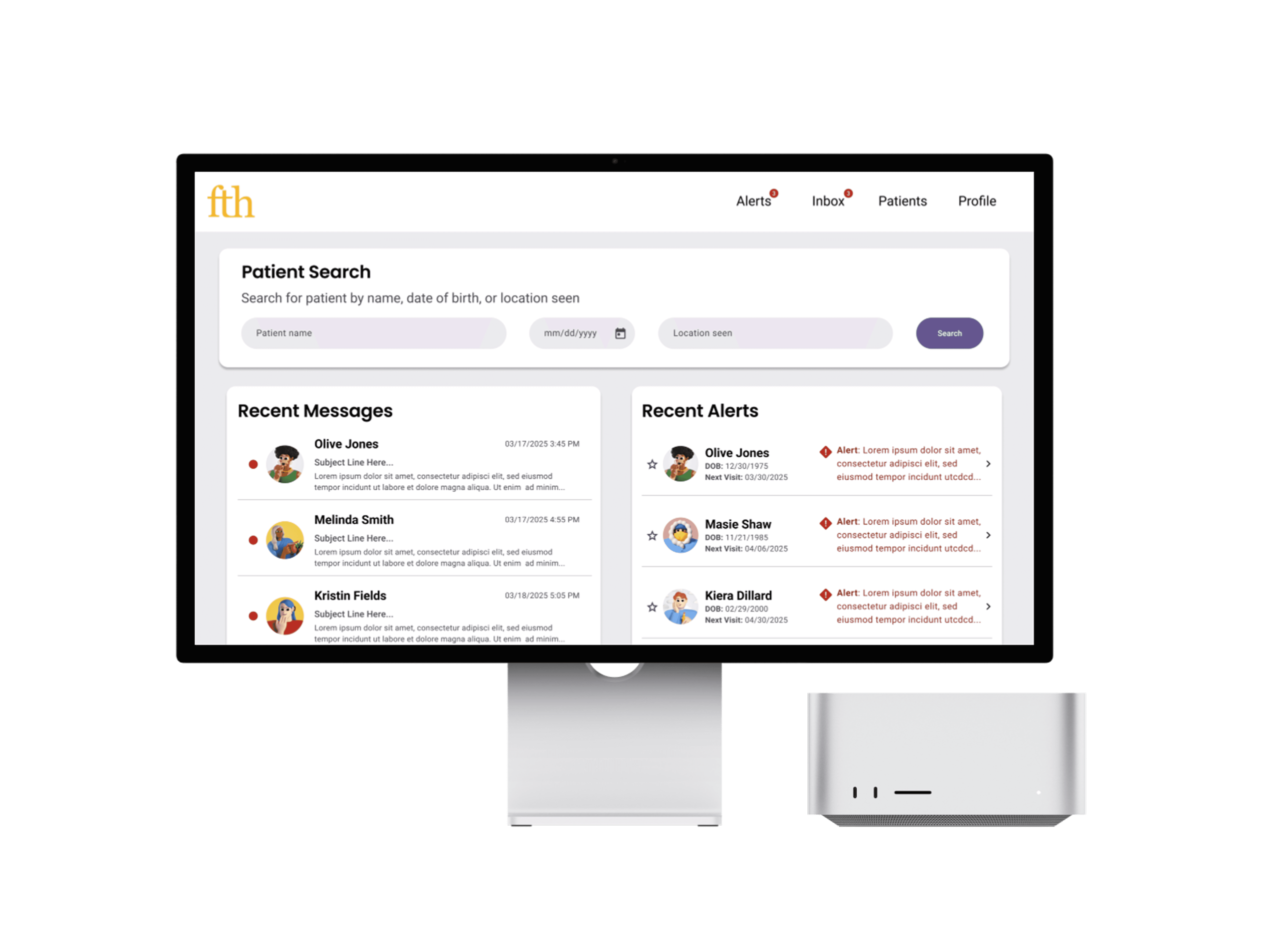
Provider Portal
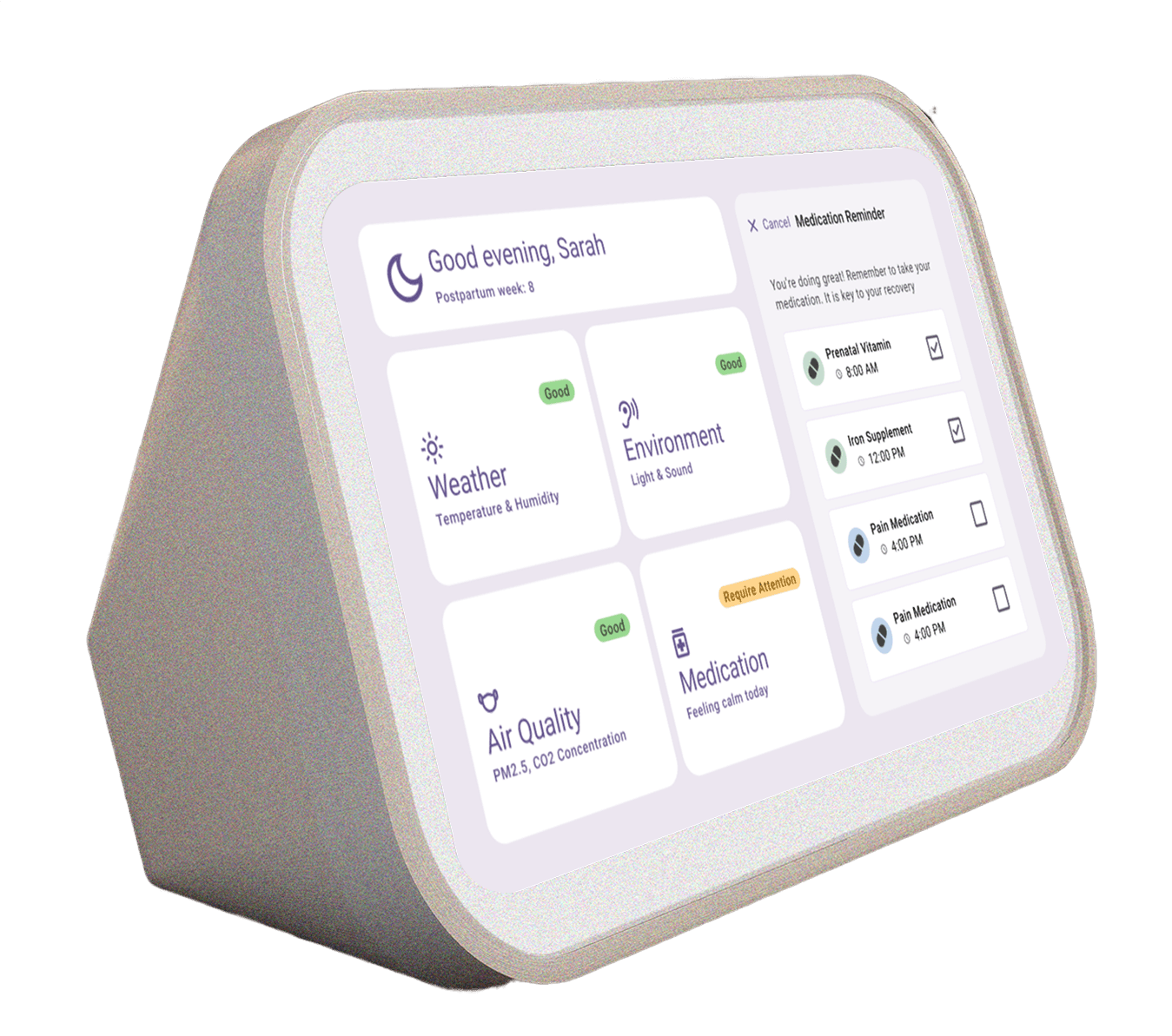
Patient Base Station
(Environmental Sensor)
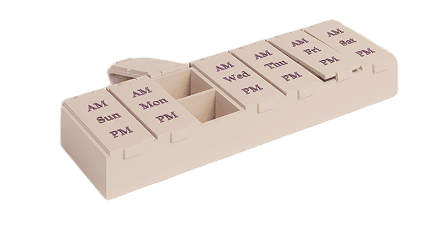
Smart Pill Box
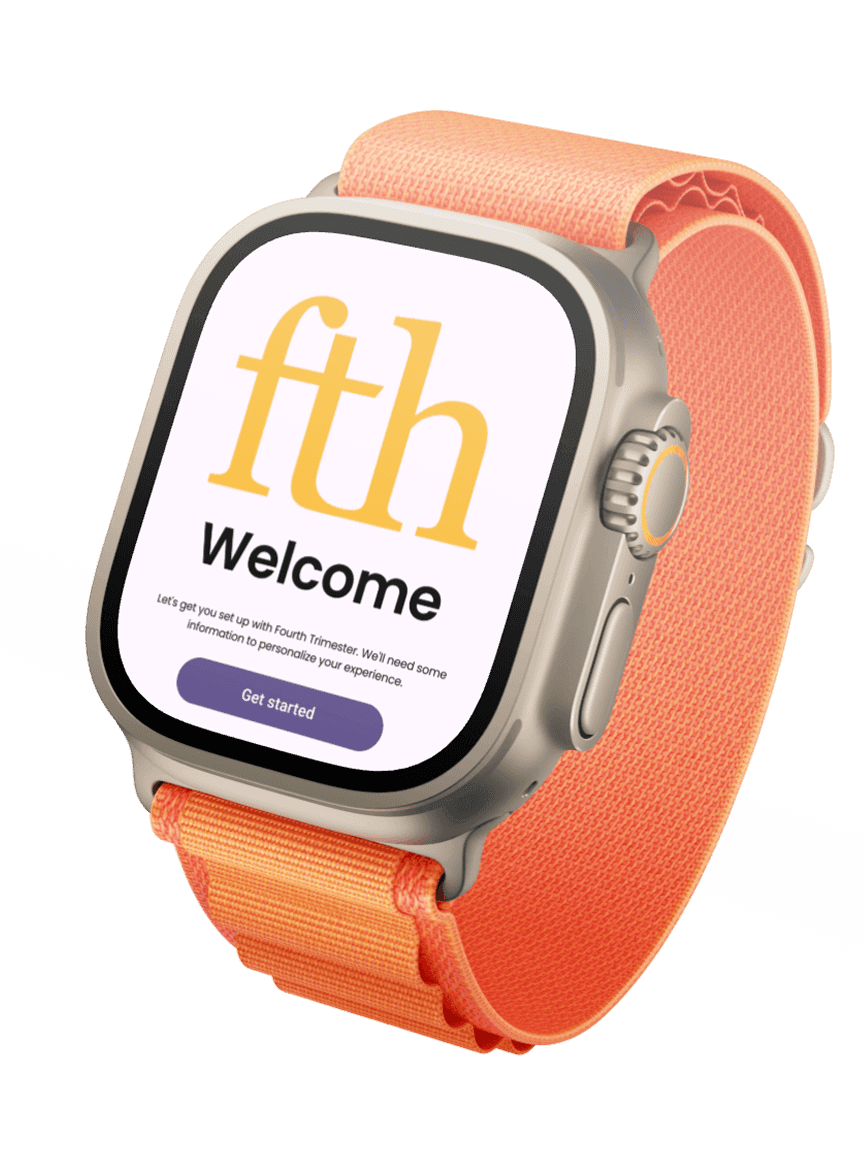
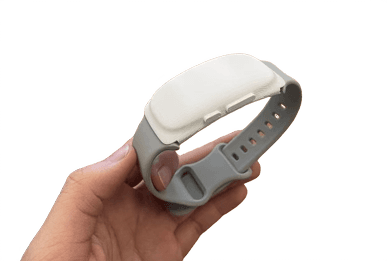
Wearable
(On-body Sensors)
Through a connected ecosystem, Fourth Trimester Health aims to Monitor, Support, and Act to improve Mother's health outcomes.
Inputs
Patient Base Station
Monitors: Light & Sound, Temperature & Humidity, Air Quality
Smart Pill Box
Monitors: Medication Adherance
On-Body Wearable
Monitors: Heart Rate, Body Temperature, and Sudden Drops in altitude, Activity
Outputs
Patient Base Station
Status of Weather, Environment, Medication Adhearance, Air Quality
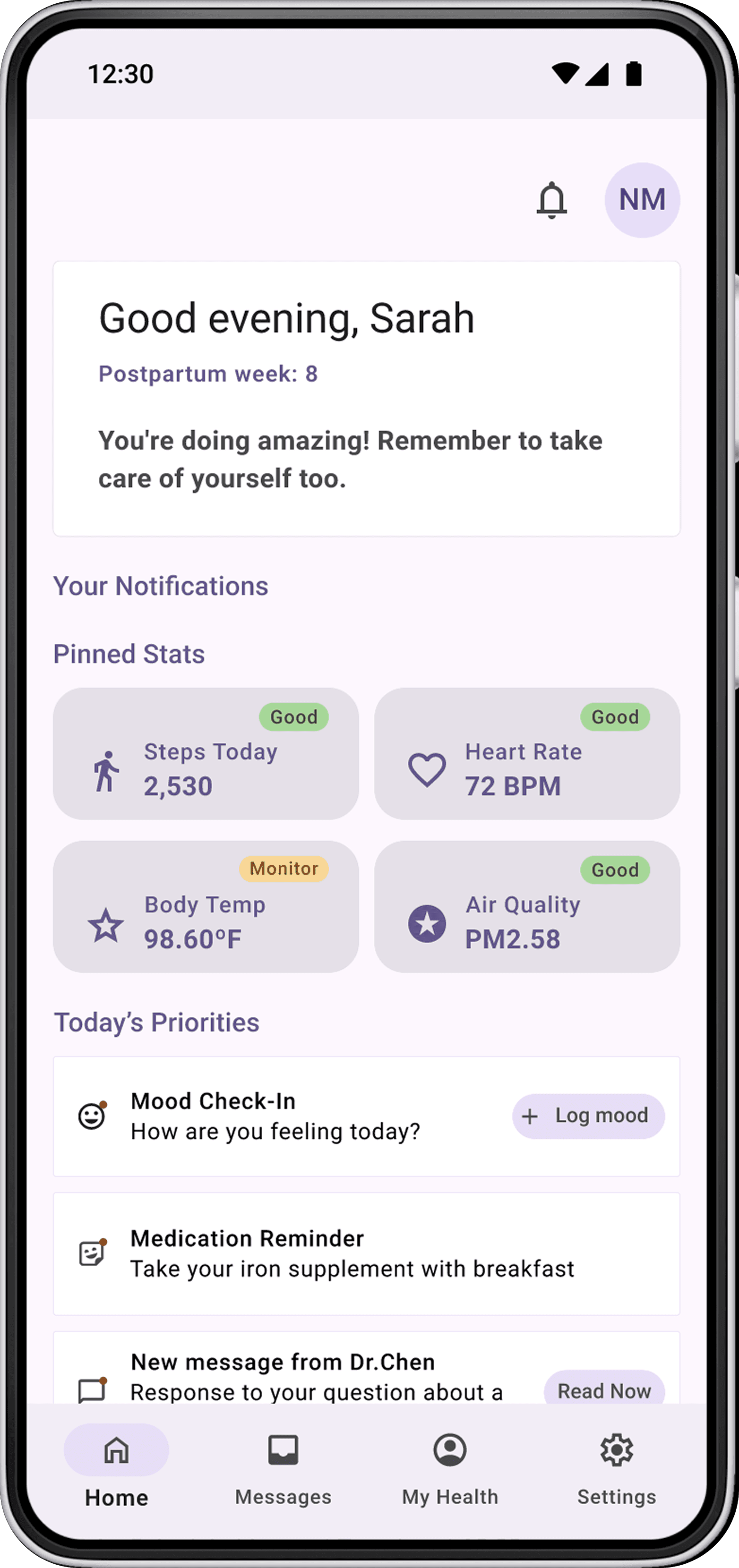
Patient App
Anomaly notifications, mitigation strategies, health updates
Provider Portal
For Provider: Patient anomaly notifications, patient messages
Patient Base Station
(Environmental Sensor)
The Challenge
Honda tasked us with designing an innovative solution for wellness.
"…leverage on-body and in-environment sensors, machine learning (ML), and large language models (LLMs), to create a platform with a digital twin of the user, providing personalized recommendations to improve their physical and mental health.
Ultimately, develop a comprehensive sensor platform to monitor and enhance individual well-being…."

Problem Definition
We focused on post-partum mothers as our users, because despite being the most fragile phase of recovery, the postpartum period remains overlooked in maternal healthcare.
Nearly 80% of post-partum deaths are preventable with timely care.1
Black women are 3x more likely to die from pregnancy-related causes than white women.2
53% of pregnancy-related deaths occur after delivery, often within the first year postpartum.3
1 Centers for Disease Control and Prevention (CDC) – MMWR Morbidity and Mortality Weekly Report (2022),
2 Centers for Disease Control and Prevention. (2024). – Racial/Ethnic Disparities in Pregnancy-Related Deaths – United States, 2018–2021.
3 Centers for Disease Control and Prevention (CDC) Maternal Mortality Review Committees (MMRC) Report, 2017–2019,

Core Functionality
Fourth Trimester Health has three big goals: Monitor, Support and intentionally Act.
Monitor
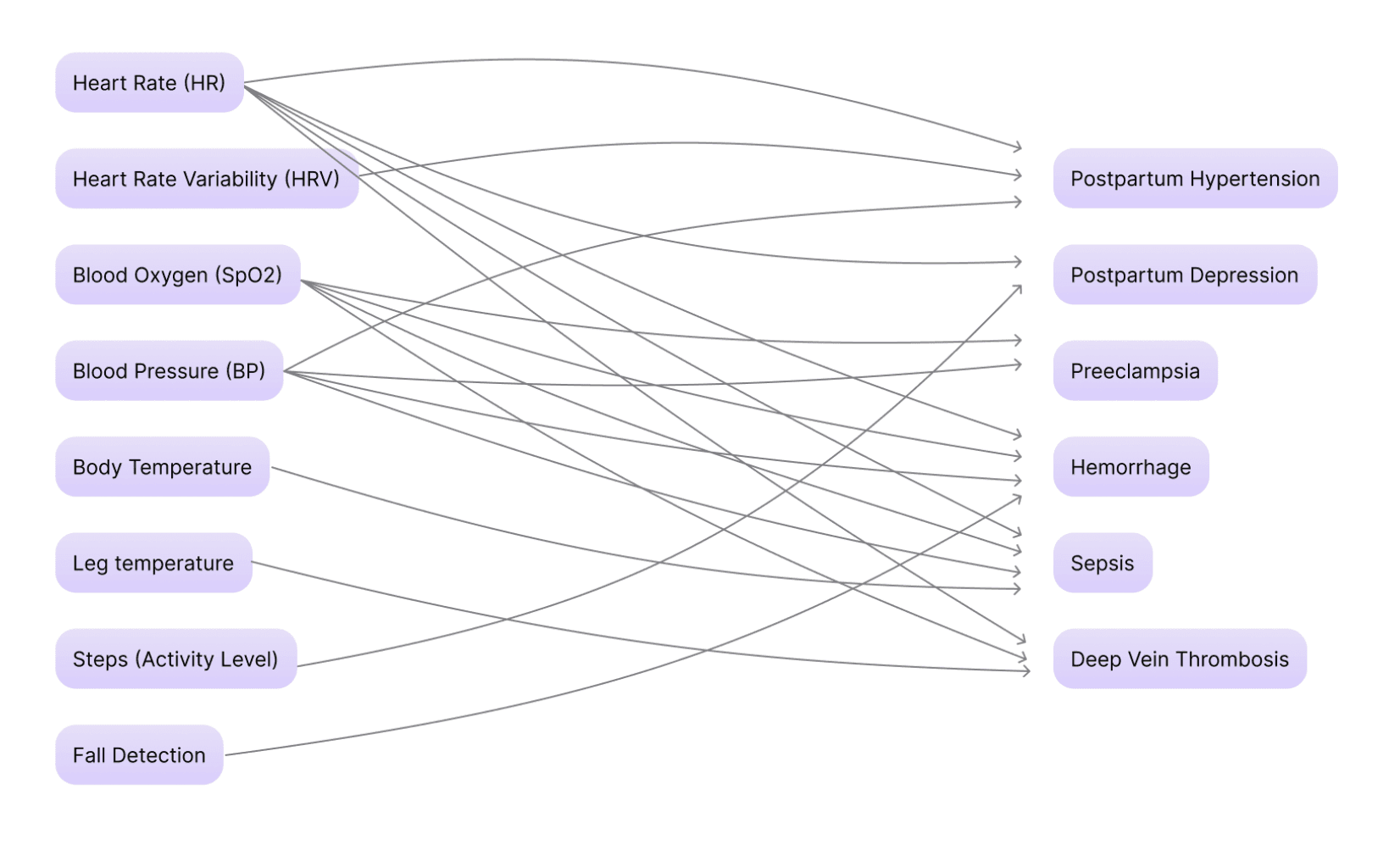
Monitor Mother's health readings from on-body and environmental sensors, augmented through health data
Translate and make sense of sensor data coming from multiple input sources
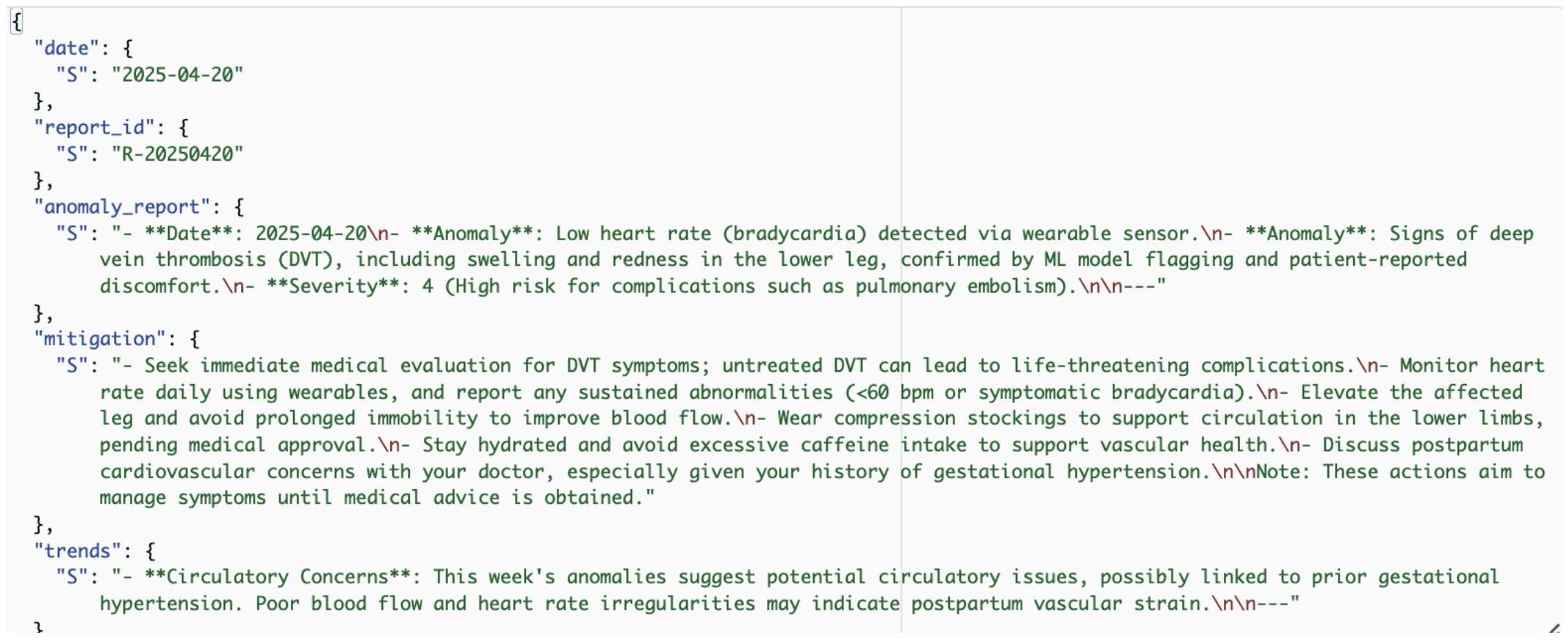
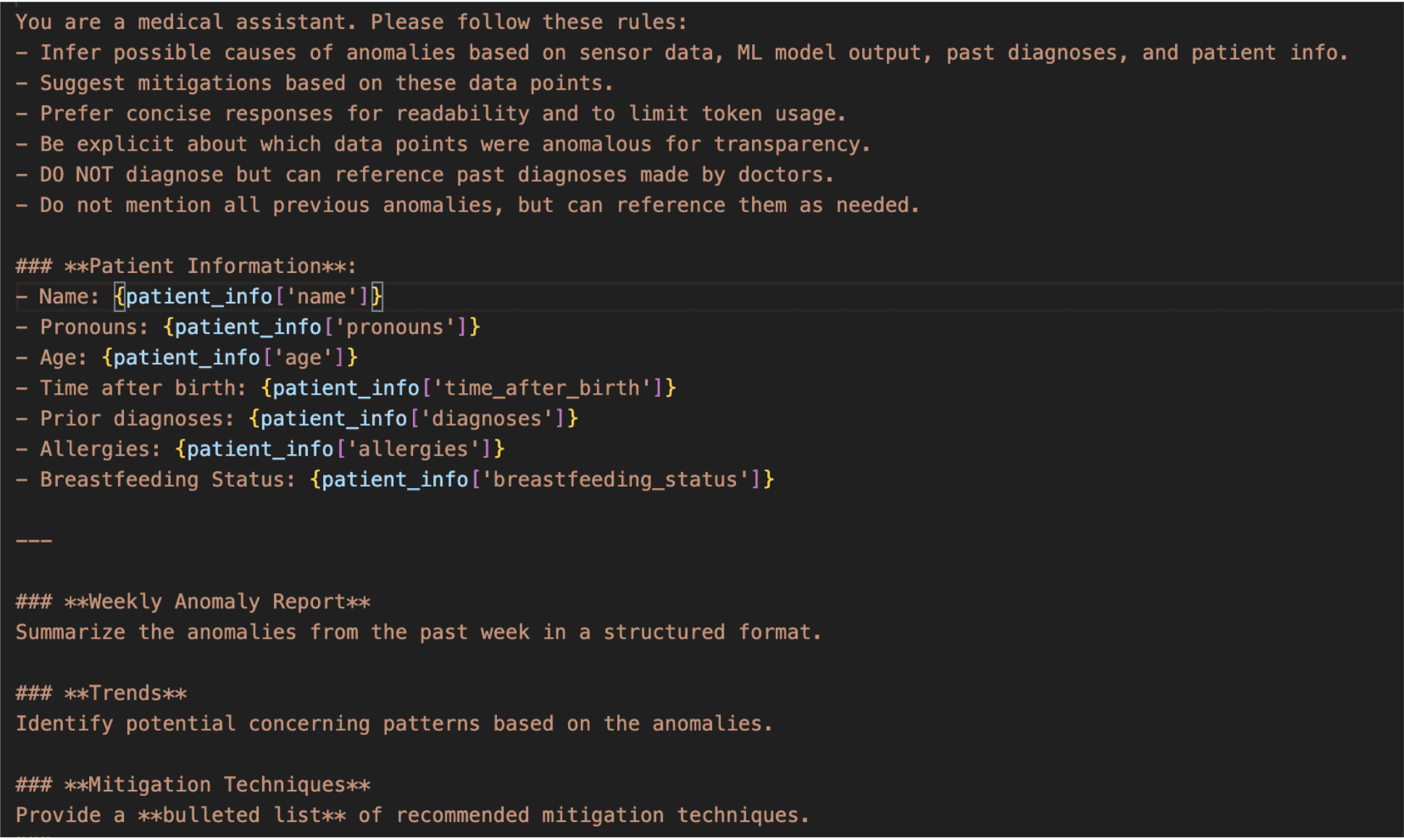
….through gentle, prioritized interfaces
Support
Gently guide Mother with personalized best practices based on her postpartum phase, health status, and sensor readings
Patient App
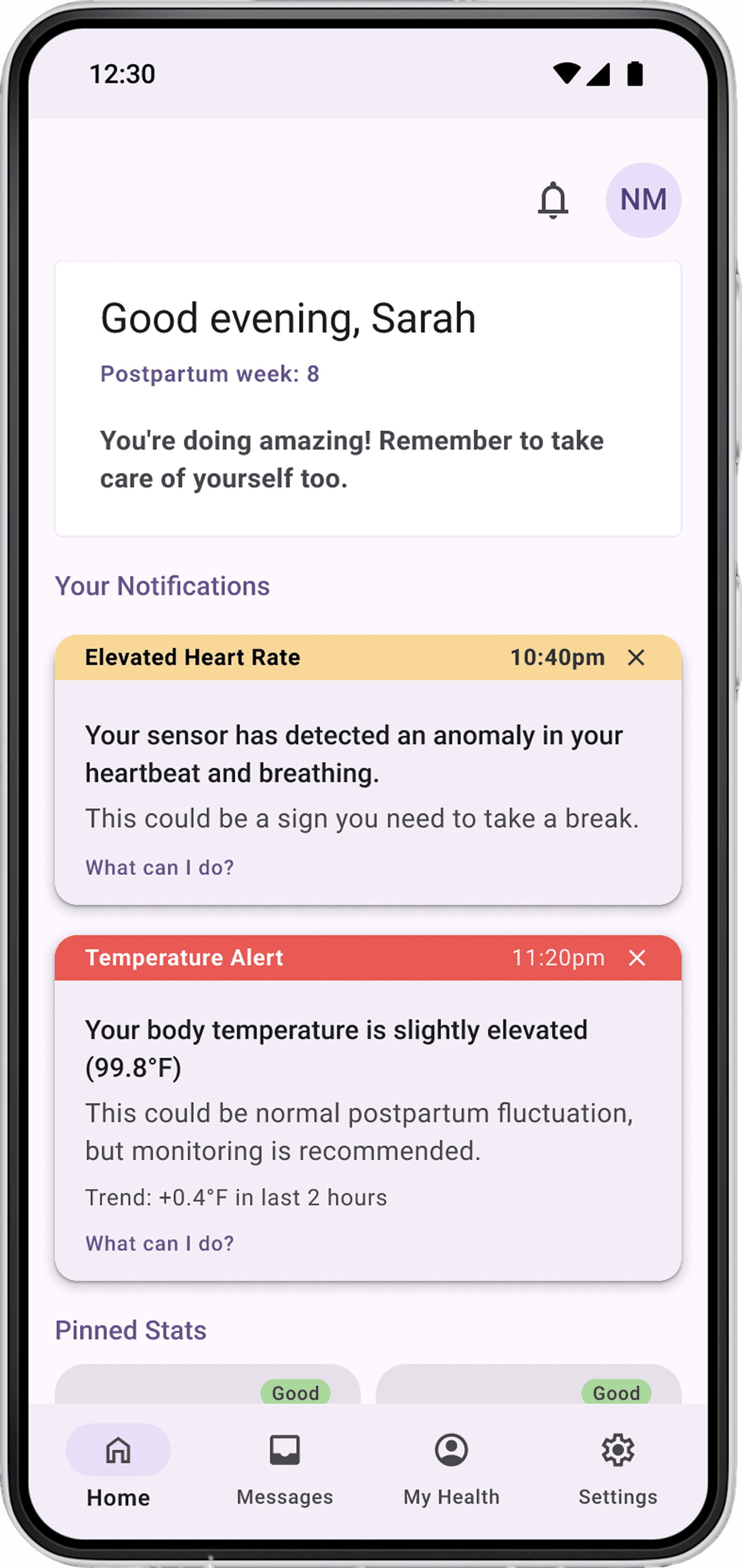
Notifications, color coded by Severity Score keep mother empathetically informed and supported with advice
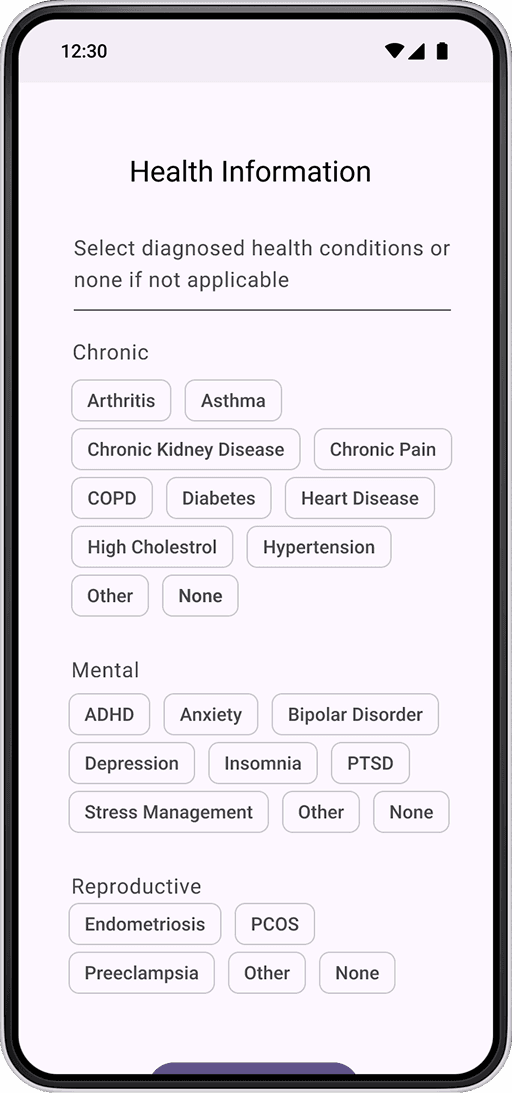
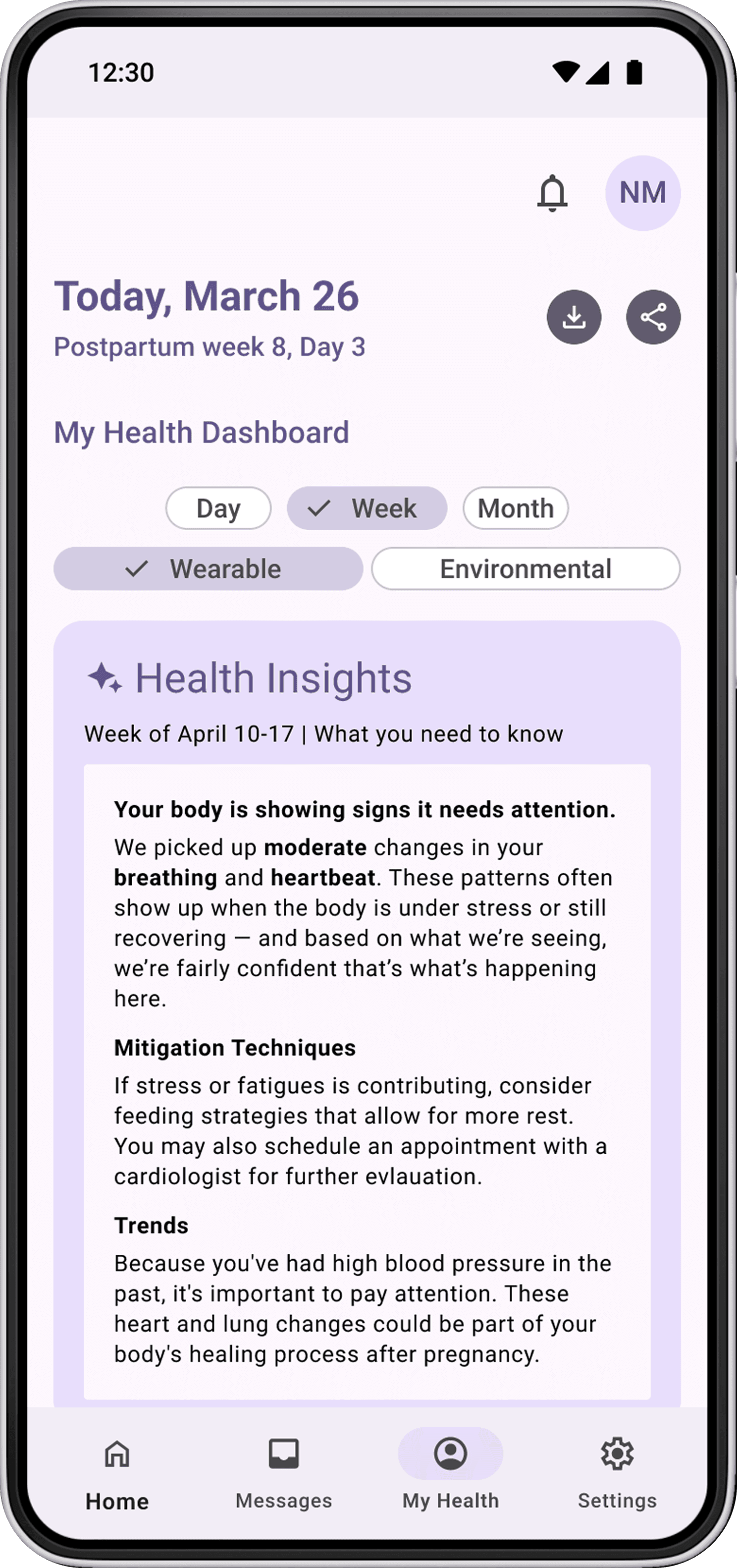
..allowing us to provide rich health insights and recommendations
At account creation, Mother's profile provides us with an understanding of her health profile
Act
Automatically escalate Severe Anomalies to request urgent support
Provider Portal
Providers are informed of anomalies with a Severity Score>4 automatically
Wearable
If the wearable detects a Fall or if an anomaly with a Severity Score>5 is logged, fth begins a call to 911 which can be canceled within 5 seconds
We chose human-in-the-loop for 911 calls because false positives could erode trust and waste emergency resources.
Design Decision One: Simplicity > Control
I pivoted from designing sophisticated visualizations to gentle, minimal interfaces that Mothers would actually use.
Initially I began designing detailed health visualizations that leveraged our smart sensors and algorithms to their fullest extent. However, research with five mothers revealed that they barely have the mental bandwidth to care after their own health at all. They're focused on their newborns, recovering from birth, and often severely sleep deprived.
That is how I pivoted to modular interfaces that only request Mothers' attention when needed instead of dashboards demanding analysis.
Initially, I sought to leverage our sensors to design ultra detailed dashboards
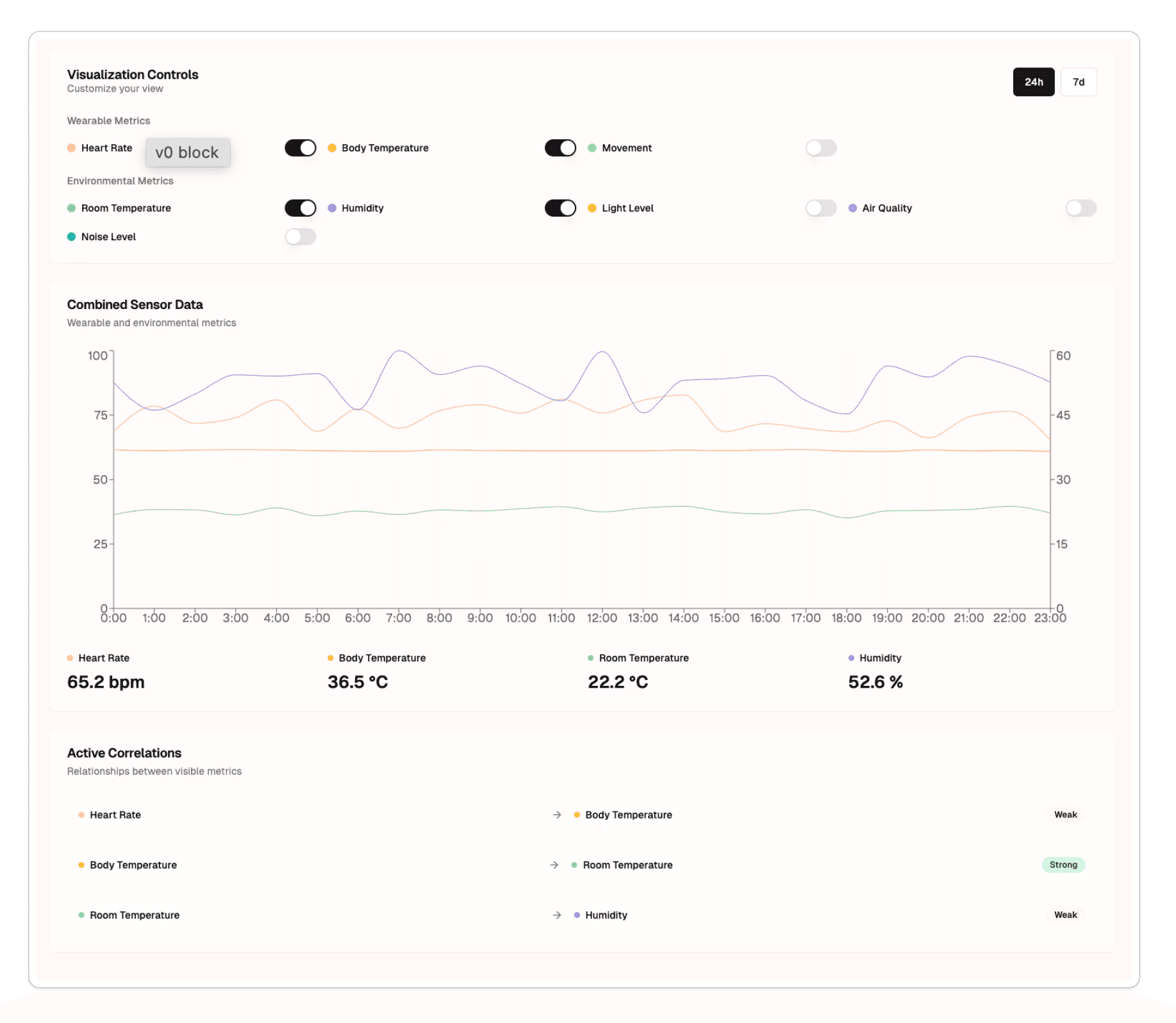
Conversations with mothers revealed support requiring the least amount of cognitive effort as possible
"Moms often have to self-direct their own care because certain health concerns - like postpartum depression, hydration, or sleep- aren't systematically monitored."
– New mom
"Wearables and apps feel burdensome. [Moms] don't want constant tracking or extra devices if it adds stress."
– New mom
Final Mobile UI
My workflow, the mobile UI of the Fourth Trimester Health, sought to interpret the rich technical data and presenting it in an empathetic manner to Mother.
Home hub with prioritized notifications and action items
Health Dashboard reporting sensor data and trends
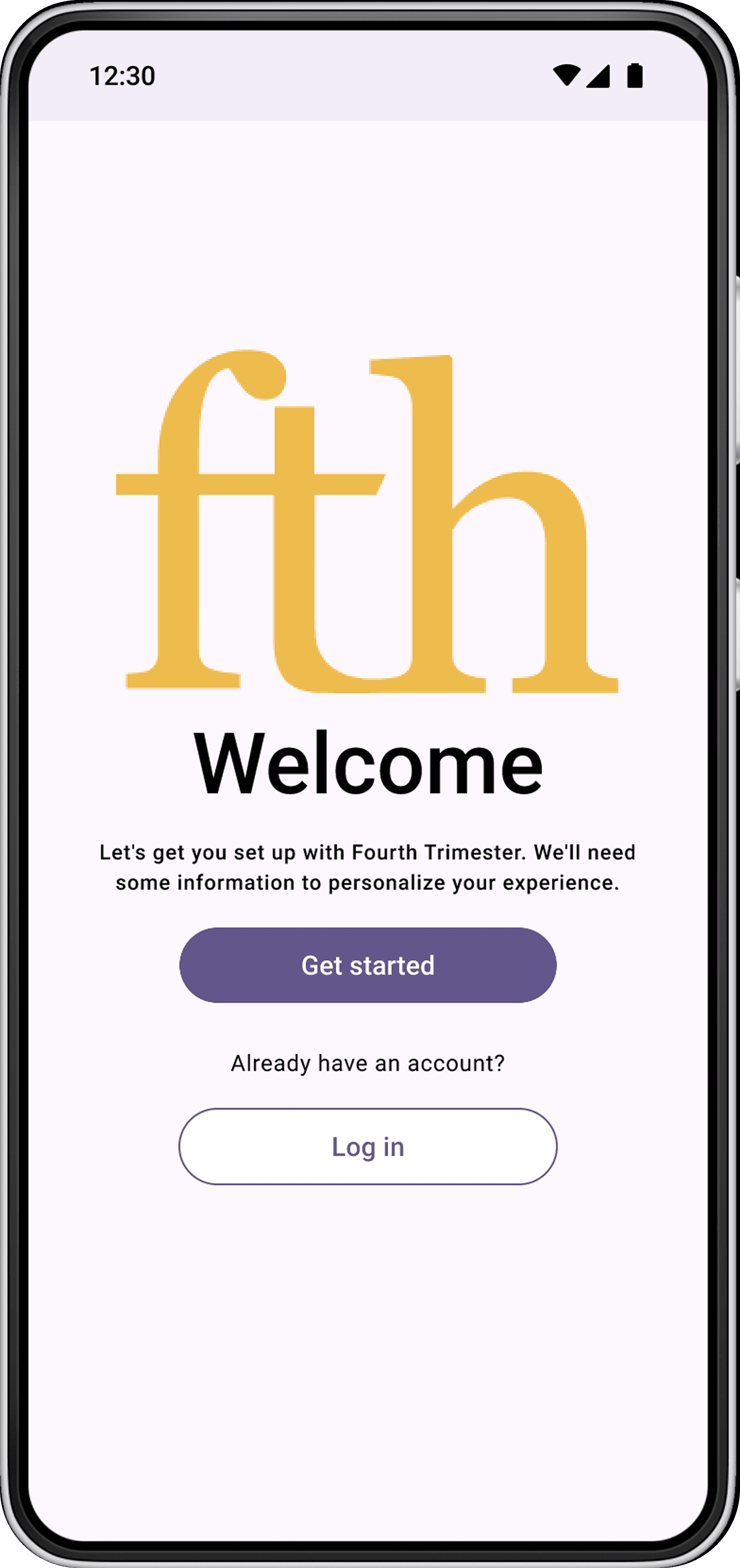
Onboarding questions to personalize maternal health insights
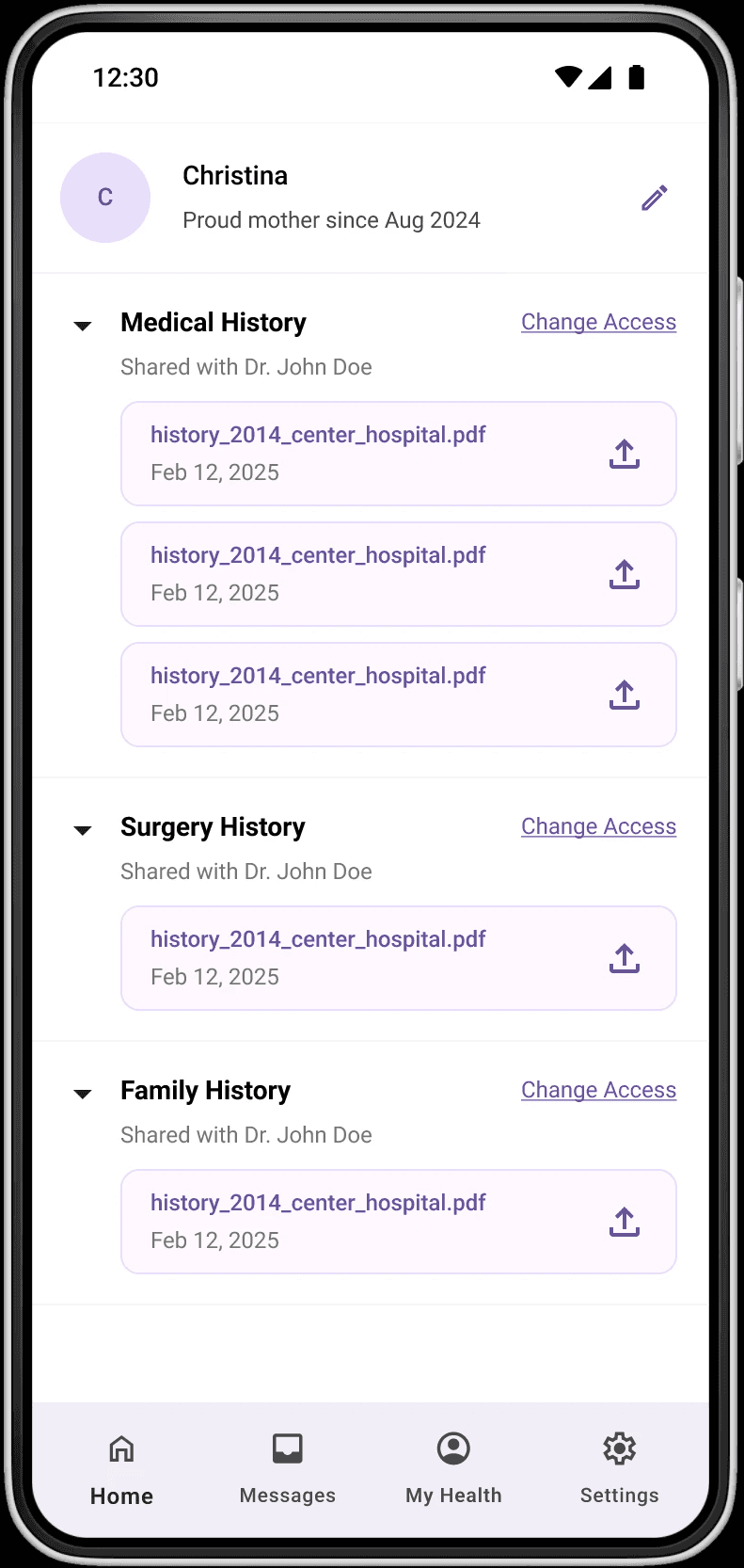
Profile with compiled health and sensor history
Takeaways
We presented our functional prototype to 15 Honda stakeholders.
Our goal was to build a functional prototype that would serve as a launching pad for future research and we did so, walking the Honda team through a Visionary Scenario of how an environment with our product would look like.
With more time, I would have further tested the impact of our Insights, Mitigation Techniques, and Emotional tracking features with mothers. That said, my biggest learning from this project was understanding the importance of working closely with intelligence engineers, understanding their workflows and outputs, so that I could successfully translate it into design.

Thanks for stopping by!