AS
AS

Designing for drop-off in the IBM Cloud provisioning experience
Designing for drop-off in the IBM Cloud provisioning experience
Designing for drop-off in the IBM Cloud provisioning experience

Role + Team
Role + Team
Designer; IBM Advisor, 2 engineers, 3 designers
Designer; IBM Advisor, 2 engineers, 3 designers
Client
Client
IBM Cloud Director (via IBM Design Thinking Studio Course)
IBM Cloud Director (via IBM Design Thinking Studio Course)
Project Goal
Project Goal
Design novel interaction patterns for the top 3 JTBD that will increase completion rates of the IBM Cloud provisioning process
Design novel interaction patterns for the top 3 JTBD that will increase completion rates of the IBM Cloud provisioning process
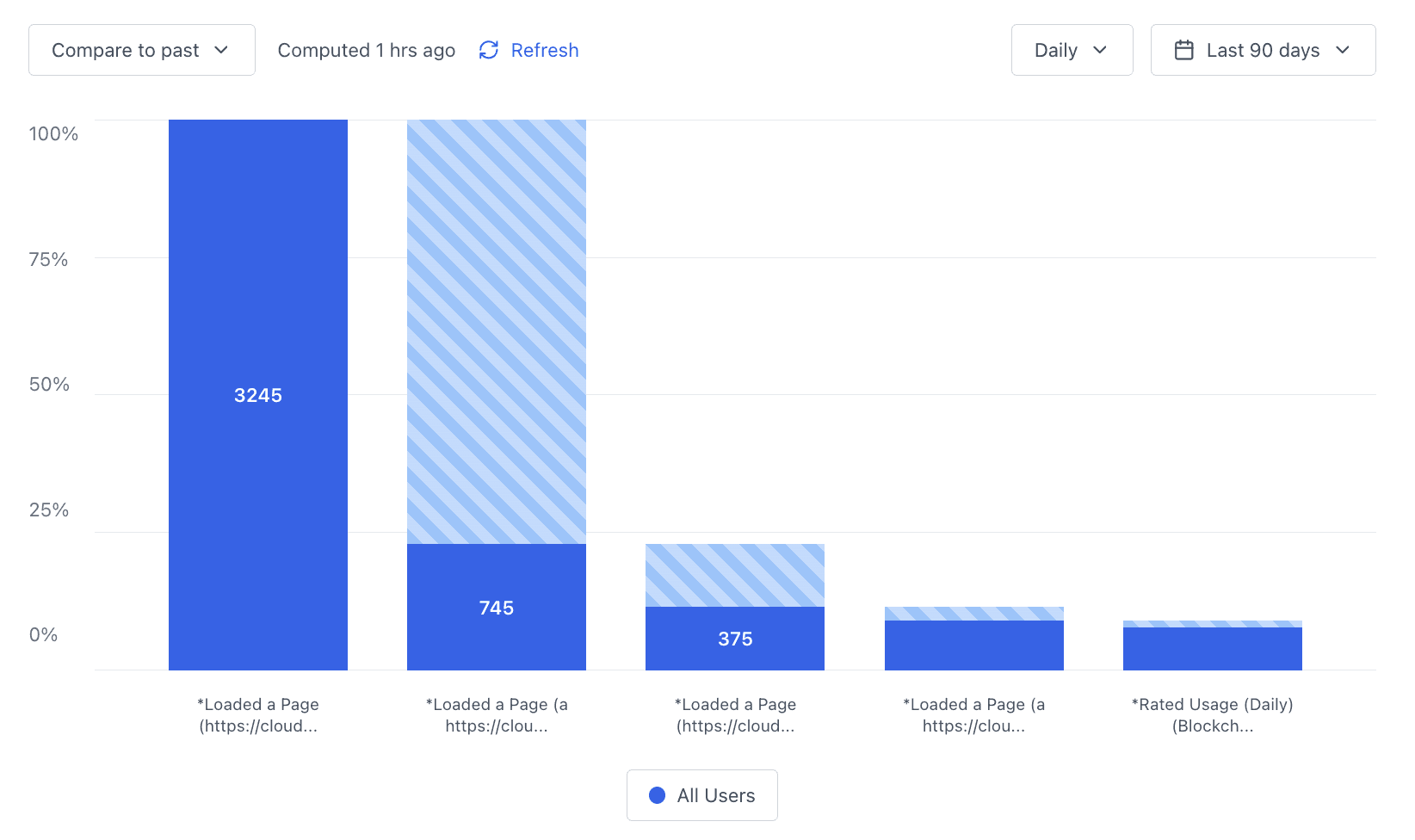
The experience of integrating IBM Cloud services deteriorated exponentially as users added services – 77% of Cloud users dropped off after the first step, costing up to $5 million in lost revenue.
Users compared navigating the provisioning experience to shopping in a grocery store with no signage: they didn't know where to find what they were looking for or seek guidance.
Only 7% of users who began the journey successfully completed it!
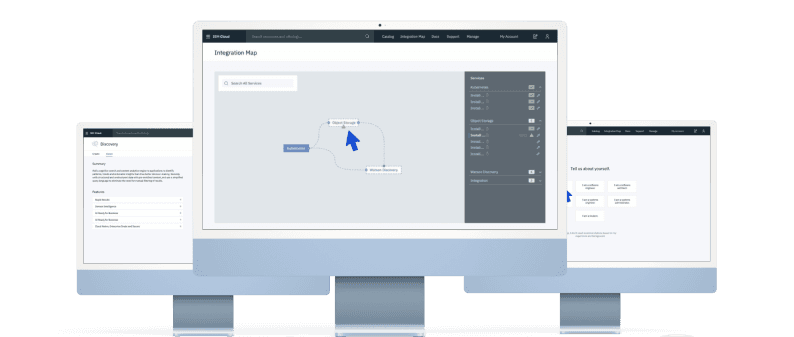
After months of highly technical research with internal and external IBM Cloud stakeholders, we presented a 3-part platform solution to ameliorate the drop off.
Final Designs
Onboarding Questionnaire
An intake survey to tailor support throughout the platform according to user goals and technical expertise
Integration Map
An visualization of the workflow that provides users insight into the expected steps and effort/time commitment
Unique Error Codes
Error Codes that provide visibility into mistakes made along the way and points to tailored resources
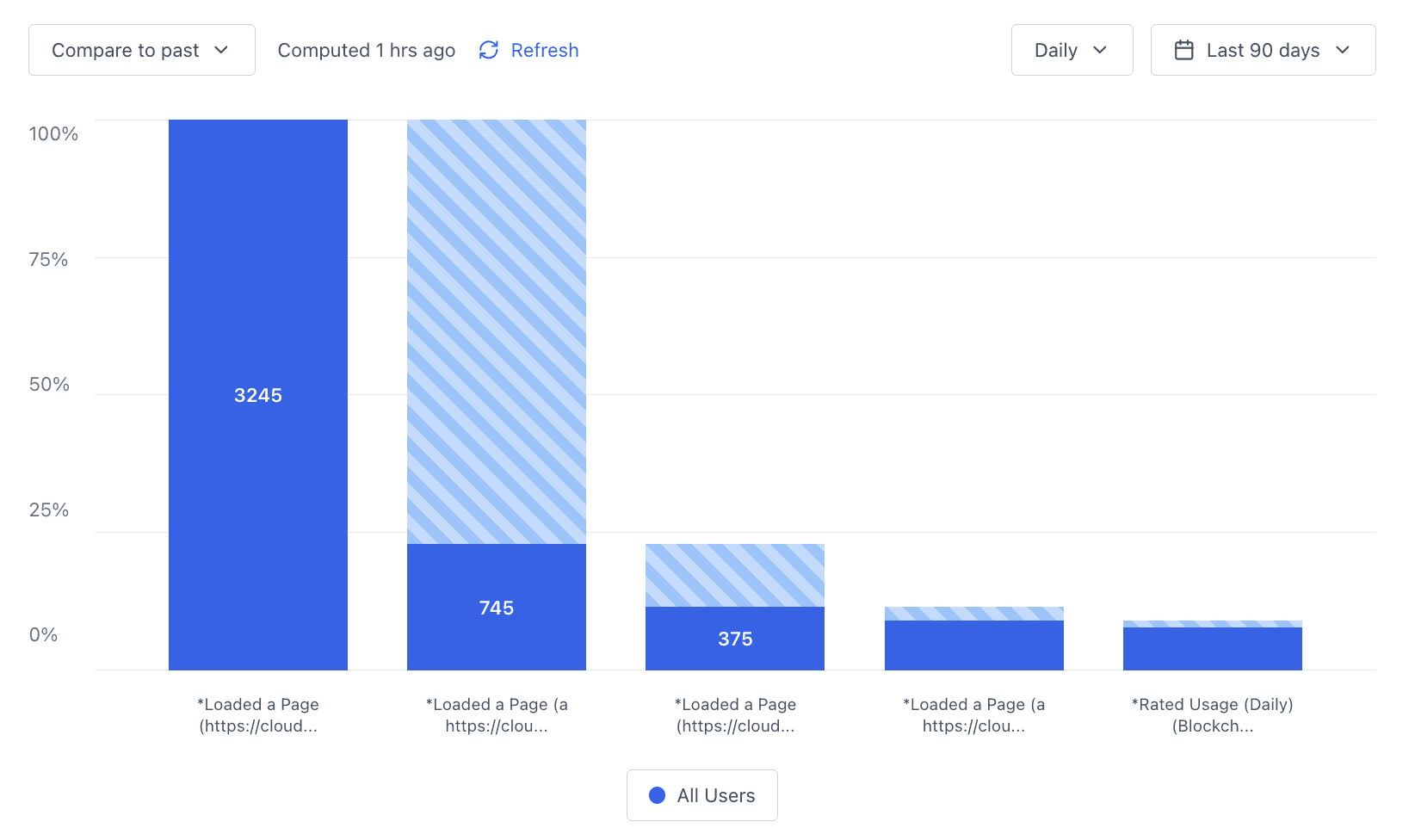
The experience of integrating IBM Cloud services deteriorated exponentially as users added services – 77% of Cloud users dropped off after the first step, costing up to $5 million in lost revenue.
Users compared navigating the provisioning experience to shopping in a grocery store with no signage: they didn't know where to find what they were looking for or seek guidance.
Only 7% of users who began the journey successfully completed it!
After months of highly technical research with internal and external IBM Cloud stakeholders, we presented a 3-part platform solution to ameliorate the drop off.
Final Designs
Onboarding Questionnaire
An intake survey to tailor support throughout the platform according to user goals and technical expertise
Integration Map
An visualization of the workflow that provides users insight into the expected steps and effort/time commitment
Unique Error Codes
Error Codes that provide visibility into mistakes made along the way and points to tailored resources
The experience of integrating IBM Cloud services deteriorated exponentially as users added services – 77% of Cloud users dropped off after the first step, costing up to $5 million in lost revenue.
Users compared navigating the provisioning experience to shopping in a grocery store with no signage: they didn't know where to find what they were looking for or seek guidance.
Only 7% of users who began the journey successfully completed it!
After months of highly technical research with internal and external IBM Cloud stakeholders, we presented a 3-part platform solution to ameliorate the drop off.
Final Designs
Onboarding Questionnaire
An intake survey to tailor support throughout the platform according to user goals and technical expertise
Integration Map
An visualization of the workflow that provides users insight into the expected steps and effort/time commitment
Unique Error Codes
Error Codes that provide visibility into mistakes made along the way and points to tailored resources
Research
Research
We dug into the provisioning experience by accompanying 20 highly technical stakeholders on their journeys – and understood that even experts were lost.
We dug into the provisioning experience by accompanying 20 highly technical stakeholders on their journeys – and understood that even experts were lost.
To understand provisioning from every angle, we conducted a thorough review of IBM's performance metrics and ran 90-minute interviews and contextual inquiries with people across IBM.
Each role gave us a different perspective on how services were set up and where the process broke down.
To understand provisioning from every angle, we conducted a thorough review of IBM's performance metrics and ran 90-minute interviews and contextual inquiries with people across IBM.
Each role gave us a different perspective on how services were set up and where the process broke down.
We spoke with 20 IBMers and IBM clients
We spoke with 20 IBMers and IBM clients
4
4
4
Designers
Designers
Designers
+
+
+
1
1
1
Researcher
Researcher
Researcher
+
+
+
4
4
4
UX
Specialist
UX
Specialist
UX
Specialist
+
+
+
2
2
2
Offering Managers
Offering Managers
Offering Managers
+
+
+
4
4
4
Onboarding Specialists
Onboarding Specialists
Onboarding Specialists
+
+
+
3
3
3
Developers + Architects
Developers + Architects
Developers + Architects
+
+
+
2
2
2
Enterprise Clients
Enterprise Clients
Enterprise Clients
Designers and researchers served as SMEs. Offering Managers, Onboarding Specialists, and Enterprise Developers became our primary personas, while Potential Clients helped us capture pain points outside of IBM.
Designers and researchers served as SMEs. Offering Managers, Onboarding Specialists, and Enterprise Developers became our primary personas, while Potential Clients helped us capture pain points outside of IBM.
Even the designers of the platform found that the provisioning journey was painful and full of dead ends
Even the designers of the platform found that the provisioning journey was painful and full of dead ends
Screen capture from a contextual inquiry with an IBM Cloud Architect
Screen capture from a contextual inquiry with an IBM Cloud Architect
The Provisioning Journey
The Provisioning Journey
Understanding why provisioning services felt hard.
Understanding why provisioning services felt hard.
To ground our research, we created Developer Craig, our most common user. His journey through provisioning reveals where frustrations piled up and pain points emerged.
To ground our research, we created Developer Craig, our most common user. His journey through provisioning reveals where frustrations piled up and pain points emerged.
Step 0: The Task at Hand

Craig’s manager assigns him a new project: provision two Cloud services for an upcoming live event.
Step 1: Initiating Provisioning
Craig researches on the IBM Cloud Website to learn what he needs to set up each service....

.....and is soon overwhelmed by the number of different tabs he needs to open.

Pain Point #1
Missing Support
"What do I do with this?"
UX Designer, IBM
Step 2: Understanding Requirements
He begins to provision the services but is forced to pause to look for information at each step.

He encounters an unexpected 30 minute wait time to complete the set-up.

Pain Point #2
Unclear Expectations
"I don’t have much time to set this up and no idea how long it will take...maybe I'll try AWS instead?"
UX Designer, IBM
Step 3: Deploying + Troubleshooting
After the wait, Craig begins integrating the two services.

But after clicking “deploy,” he receives a vague error message.

Where's the problem?! He hops between services to troubleshoot.

Pain Point #3
Broken Workflows
"What did I do wrong?"
UX Designer, IBM
Giving Up
After locating the issue, he retries - only to hit another error before finishing.

Frustrated, Craig re-diagnoses the problem. Many users never make it this far.

Step 0: The Task at Hand
Craig’s manager assigns him a new project: provision two Cloud services for an upcoming live event.
Craig’s manager assigns him a new project: provision two Cloud services for an upcoming live event.
Step 1: Initiating Provisioning
Craig researches on the IBM Cloud Website to learn what he needs to set up each service....
Craig researches on the IBM Cloud Website to learn what he needs to set up each service....
.....and is soon overwhelmed by the number of different tabs he needs to open.
.....and is soon overwhelmed by the number of different tabs he needs to open.
Pain Point #1
Missing Support
"What do I do with this?"
UX Designer, IBM
Step 2: Understanding Requirements
He begins to provision the services but is forced to pause to look for information at each step.
He begins to provision the services but is forced to pause to look for information at each step.
He encounters an unexpected 30 minute wait time to complete the set-up.
He encounters an unexpected 30 minute wait time to complete the set-up.
Pain Point #2
Unclear Expectations
"I don’t have much time to set this up and no idea how long it will take...maybe I'll try AWS instead?"
UX Designer, IBM
Step 3: Deploying + Troubleshooting
After the wait, Craig begins integrating the two services.
After the wait, Craig begins integrating the two services.
But after clicking “deploy,” he receives a vague error message.
But after clicking “deploy,” he receives a vague error message.
Where's the problem?! He hops between services to troubleshoot.
Where's the problem?! He hops between services to troubleshoot.
Pain Point #3
Broken Workflows
"What did I do wrong?"
UX Designer, IBM
Giving Up
After locating the issue, he retries - only to hit another error before finishing.
After locating the issue, he retries - only to hit another error before finishing.
Frustrated, Craig re-diagnoses the problem. Many users never make it this far.
Frustrated, Craig re-diagnoses the problem. Many users never make it this far.
Pain Points to Solve for
Pain Points to Solve for
At the end of our discovery phase, we had three clear pain points we needed to solve in our designs.
At the end of our discovery phase, we had three clear pain points we needed to solve in our designs.

#1 Missing Support
#1 Missing Support
IBM Cloud use cases require tailored solutions, but the platform does not help users understand the services they need or how to set them up.
IBM Cloud use cases require tailored solutions, but the platform does not help users understand the services they need or how to set them up.
There isn’t support that helps you by saying ‘Well if you got X service and Y service, you should probably X service too to make them work better.’ That’s a missed opportunity.
There isn’t support that helps you by saying ‘Well if you got X service and Y service, you should probably X service too to make them work better.’ That’s a missed opportunity.
There isn’t support that helps you by saying ‘Well if you got X service and Y service, you should probably X service too to make them work better.’ That’s a missed opportunity.
UX and Analytical Researcher, IBM
UX and Analytical Researcher, IBM
UX and Analytical Researcher, IBM

#2 Unclear Expecations
#2 Unclear Expecations
Users don't know what to expect in terms of the time and effort required. They also don't know what resources they can use.
Users don't know what to expect in terms of the time and effort required. They also don't know what resources they can use.
"You can’t search for something you don’t know exists."
"You can’t search for something you don’t know exists."
"You can’t search for something you don’t know exists."
UX Specialist, IBM
UX Specialist, IBM
UX Specialist, IBM

#3 Broken Workflows
#3 Broken Workflows
Pauses during provisioning workflows are common for research on guidance, and even competitors.
Pauses during provisioning workflows are common for research on guidance, and even competitors.
"I want it to be straightforward to easily connect [services] together. I don’t wanna have to stop and contact support or read outdated docs."
"I want it to be straightforward to easily connect [services] together. I don’t wanna have to stop and contact support or read outdated docs."
"I want it to be straightforward to easily connect [services] together. I don’t wanna have to stop and contact support or read outdated docs."
Innovation Project Manager, SXSW
Innovation Project Manager, SXSW
Innovation Project Manager, SXSW
Synthesis + Brainstorming
Synthesis + Brainstorming
We leveraged IBM's Enterprise Design Thinking framework to guide our synthesizing, brainstorming, and prioritization.
We leveraged IBM's Enterprise Design Thinking framework to guide our synthesizing, brainstorming, and prioritization.
Synthesizing
Synthesizing


Doing, Thinking, Feeling & Mind Maps
Doing, Thinking, Feeling & Mind Maps
Brainstorming
Brainstorming

To-Be Scenarios
To-Be Scenarios
Evaluating
Evaluating
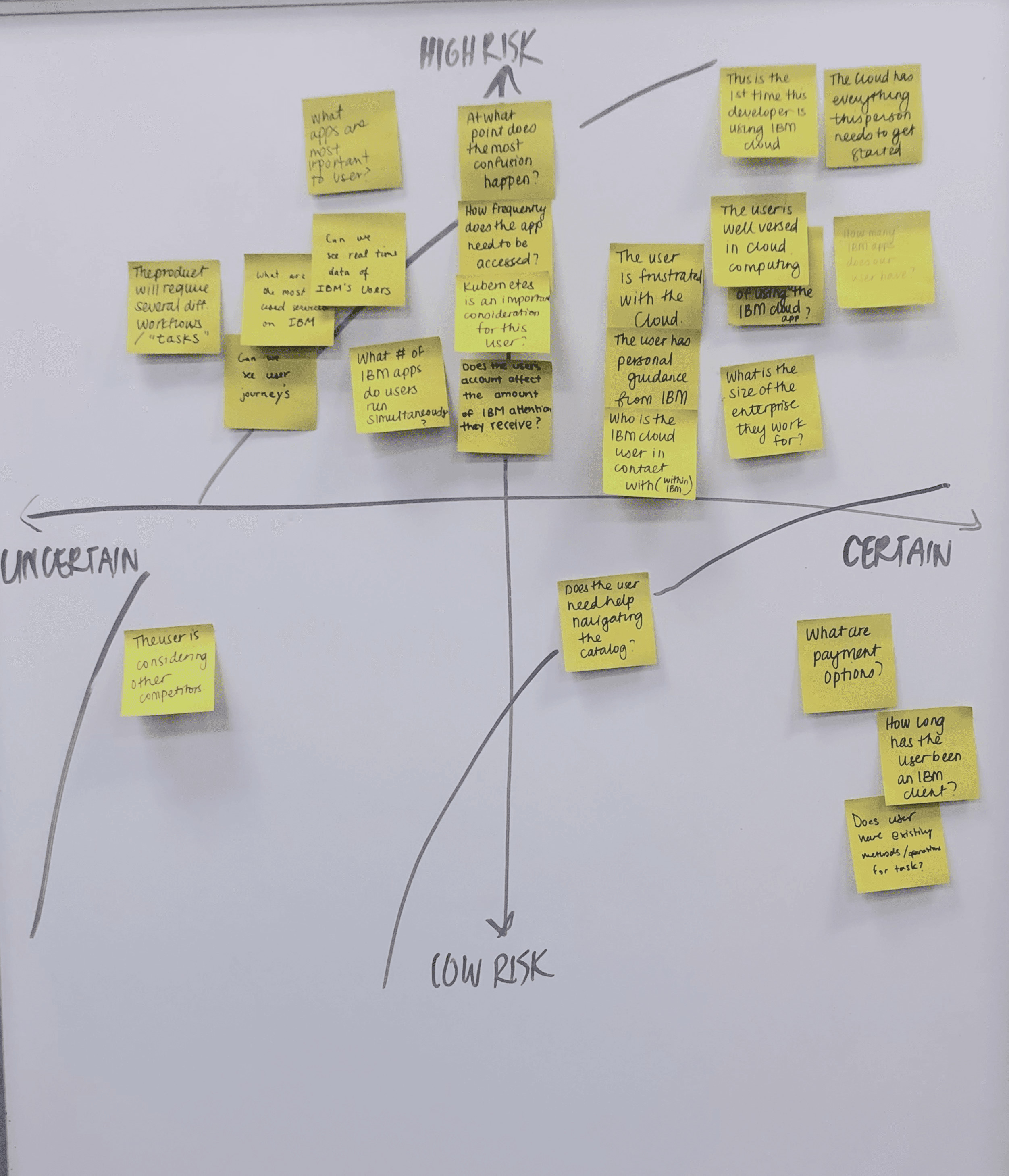
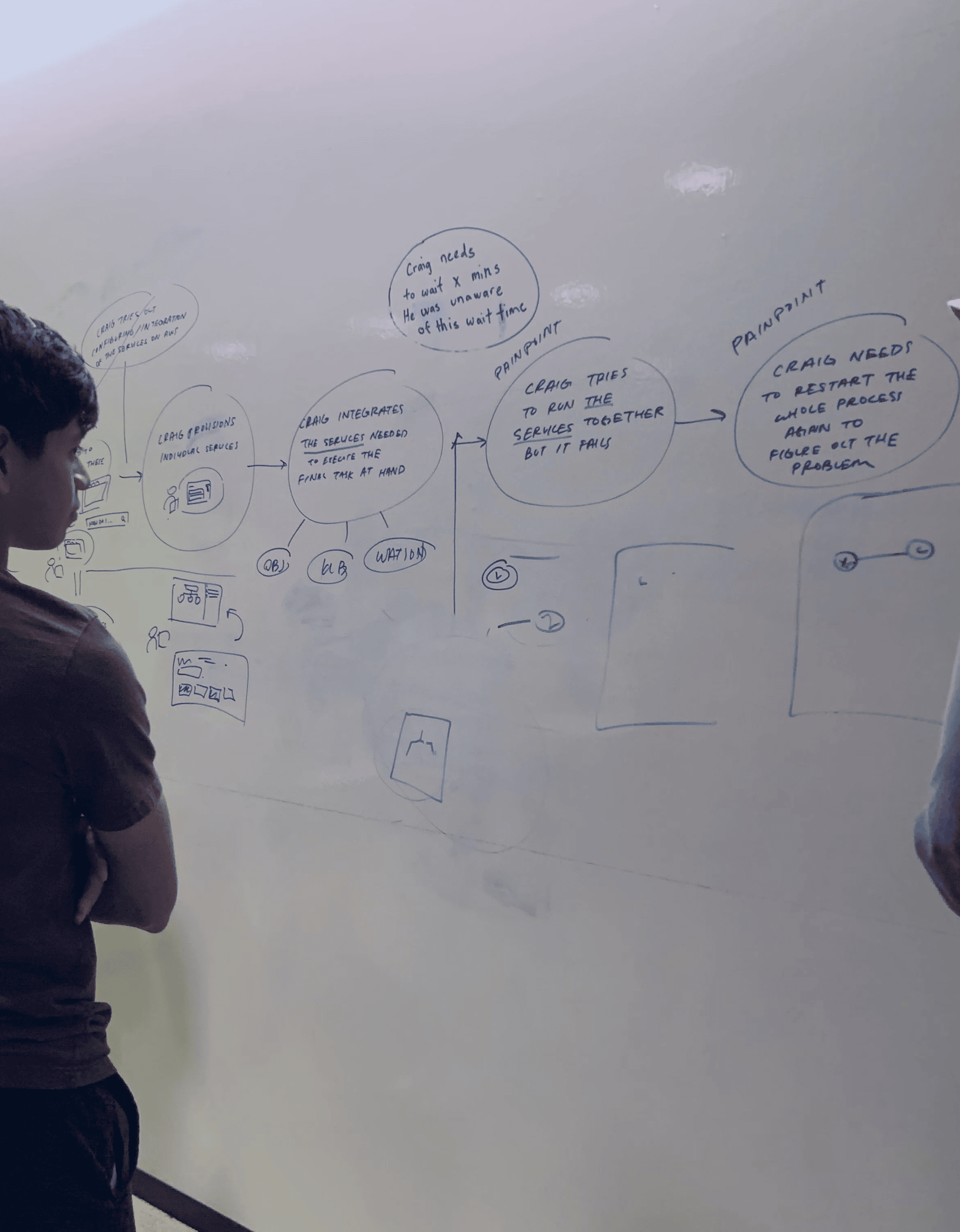
Risk/Certainty Matrix + Prioritization Journey Map
Risk/Certainty Matrix + Prioritization Journey Map
The New Provisioning Journey
The New Provisioning Journey
A look into how our Solution changes the journey.
A look into how our Solution changes the journey.
Craig’s manager assigns him a new project: provision two Cloud services for an upcoming live event.
Craig’s manager assigns him a new project: provision two Cloud services for an upcoming live event.
Step 1: Initiating Provisioning
Step 1: Initiating Provisioning
Solution: Onboarding Questionnaire
Solution: Onboarding Questionnaire
At the beginning of his workflow, Craig completes an onboarding questionnaire which tailors IBM’s support + guidance for provisioning according to his knowledge and goals.
At the beginning of his workflow, Craig completes an onboarding questionnaire which tailors IBM’s support + guidance for provisioning according to his knowledge and goals.
Step 2: Understanding Requirements
Step 2: Understanding Requirements
Solution: Integration Map
Solution: Integration Map
With tailored IBM resources to reference, Craig adds his desired services one by one which begin to populate visual a map.
With tailored IBM resources to reference, Craig adds his desired services one by one which begin to populate visual a map.
Step 3: Deploying and Troubleshooting
Step 3: Deploying and Troubleshooting
Solution: Unique Error Codes
Solution: Unique Error Codes
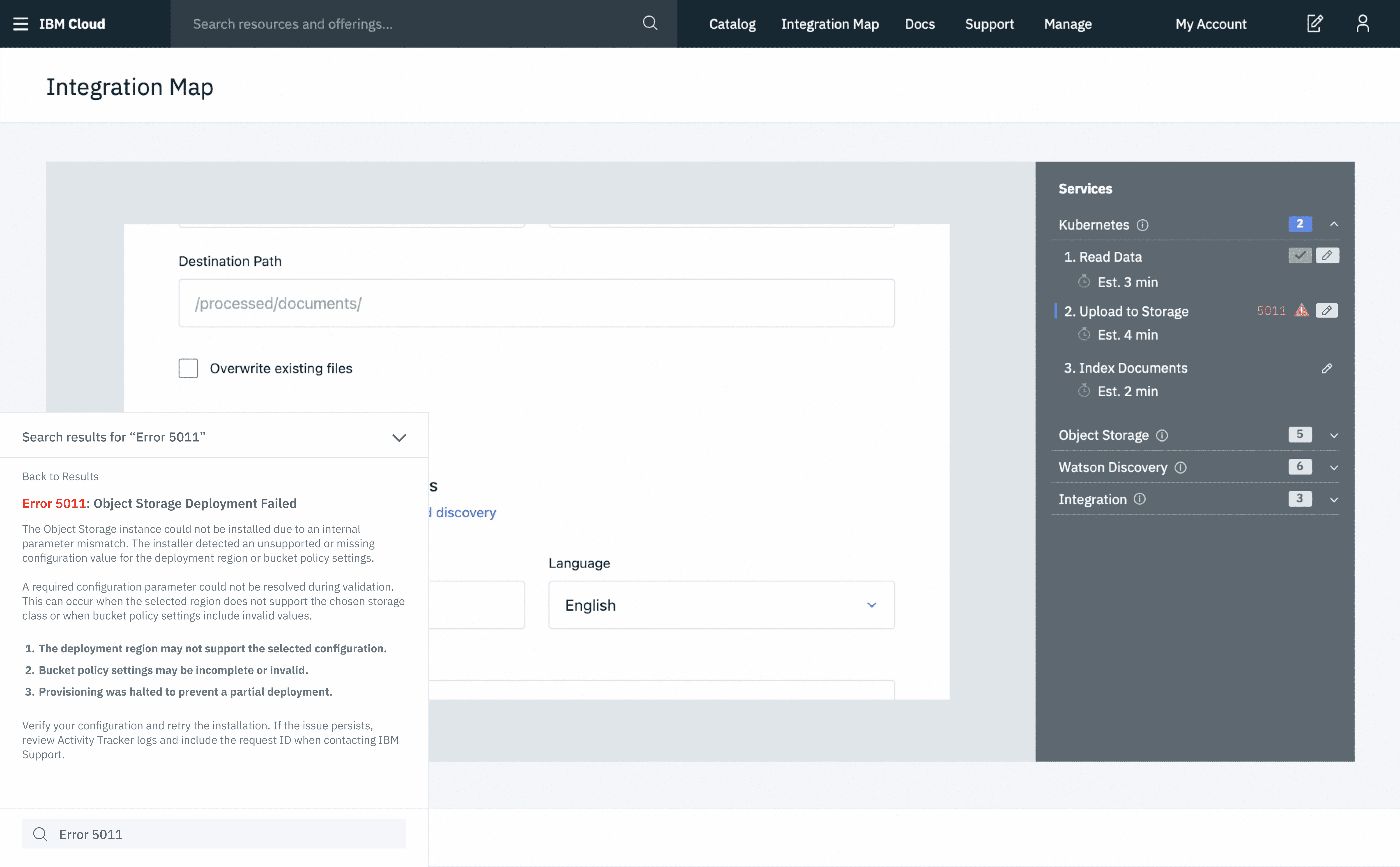
Craig comes across an error as he provisions! Well-defined error codes provide him with a quick way to search for documentation on what went wrong.
Craig comes across an error as he provisions! Well-defined error codes provide him with a quick way to search for documentation on what went wrong.
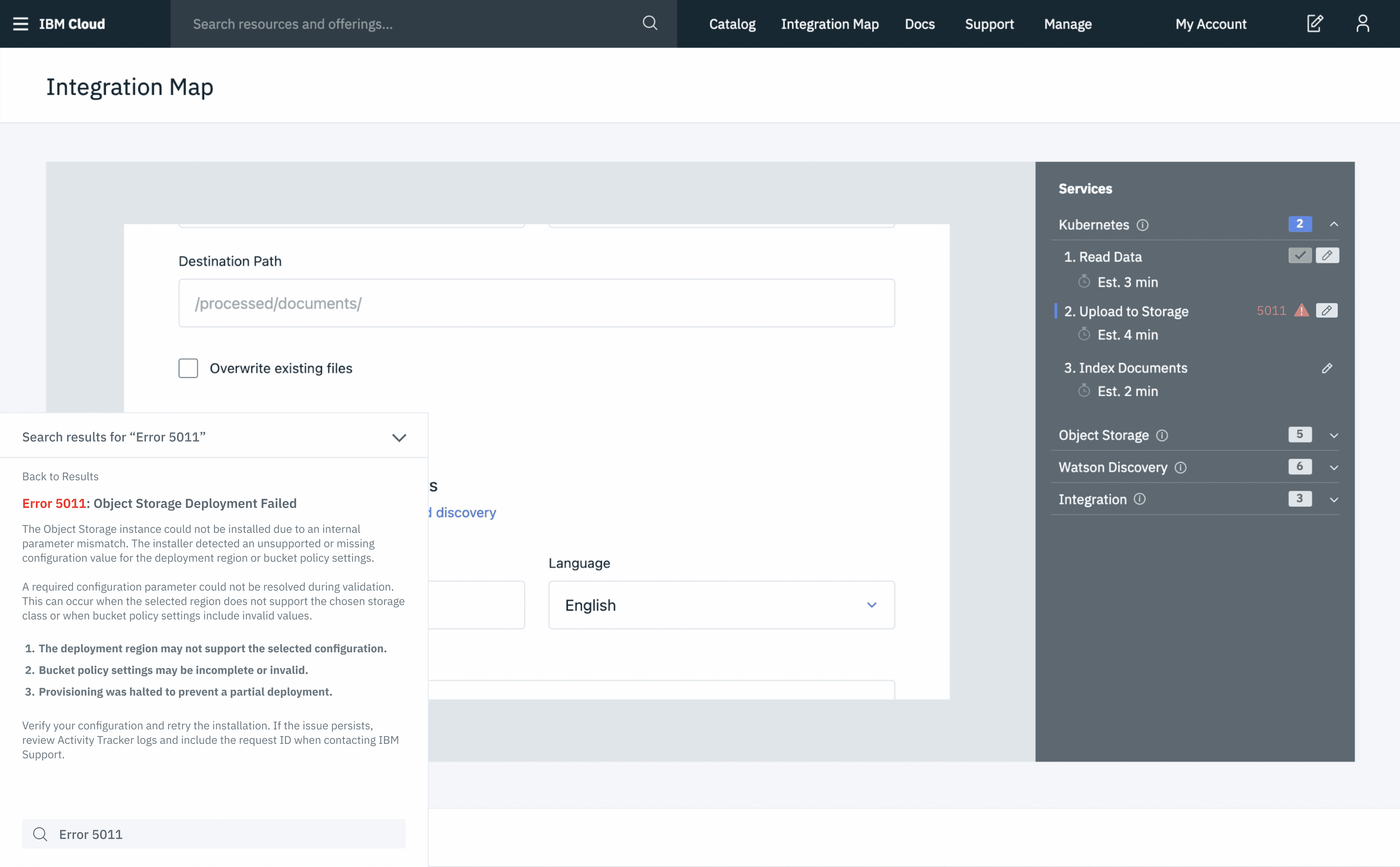
Error codes also visually align to the service being provisioned, showing where in the flow the error occurred.
Information to move forward with appears in-context via a pop-up.
Error codes also visually align to the service being provisioned, showing where in the flow the error occurred.
Information to move forward with appears in-context via a pop-up.
Error codes also visually align to the service being provisioned, showing where in the flow the error occurred.
Information to move forward with appears in-context via a pop-up.
Craig successfully deploys his app!
He's able to do so with support, defined expectations, error visibility, and a clear understanding of his work.
Craig successfully deploys his app!
He's able to do so with support, defined expectations, error visibility, and a clear understanding of his work.

Impact
Impact
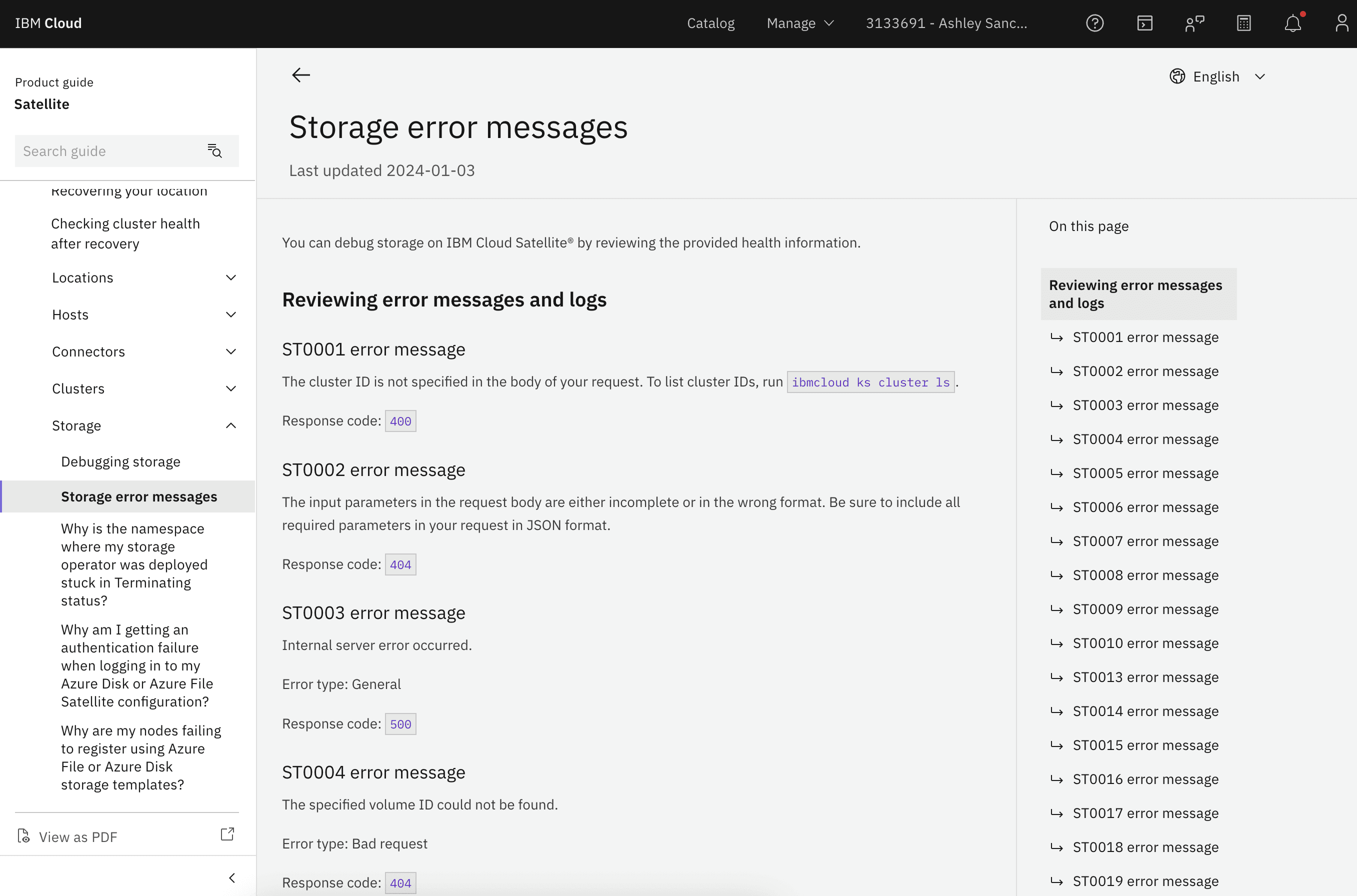
Our designs show up in award-winning IBM enterprise design experiences.
Our designs show up in award-winning IBM enterprise design experiences.
We didn’t have time to iterate on our designs during our project, but many of our ideas showed up later in IBM Cloud’s award-winning experiences. Seeing them come to life proved the value of the insights and designs we shared.
We didn’t have time to iterate on our designs during our project, but many of our ideas showed up later in IBM Cloud’s award-winning experiences. Seeing them come to life proved the value of the insights and designs we shared.
Award winning IBM Conveyor AI: Visualizing workflows.
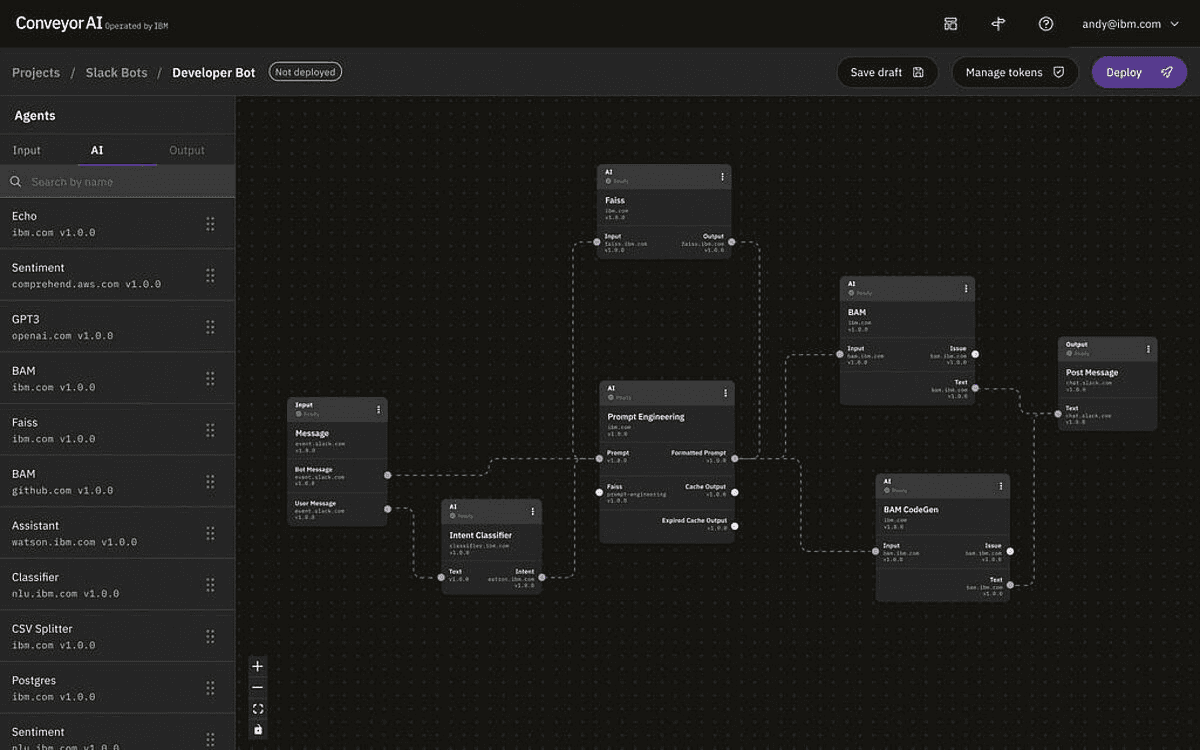
IBM Cloud storage error messages page.
Award winning IBM Cloud Satellite: Supporting users with an onboarding experience.
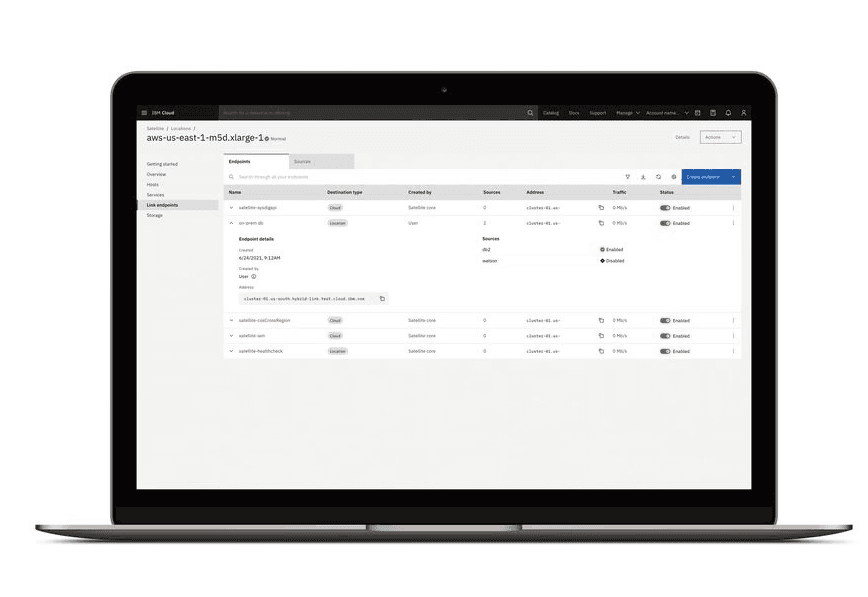
Award winning IBM Cloud Satellite: Supporting users with an onboarding experience.
Award winning IBM Conveyor AI: Visualizing workflows.
IBM Cloud storage error messages page.
Thank you for reading!
Thank you for reading!
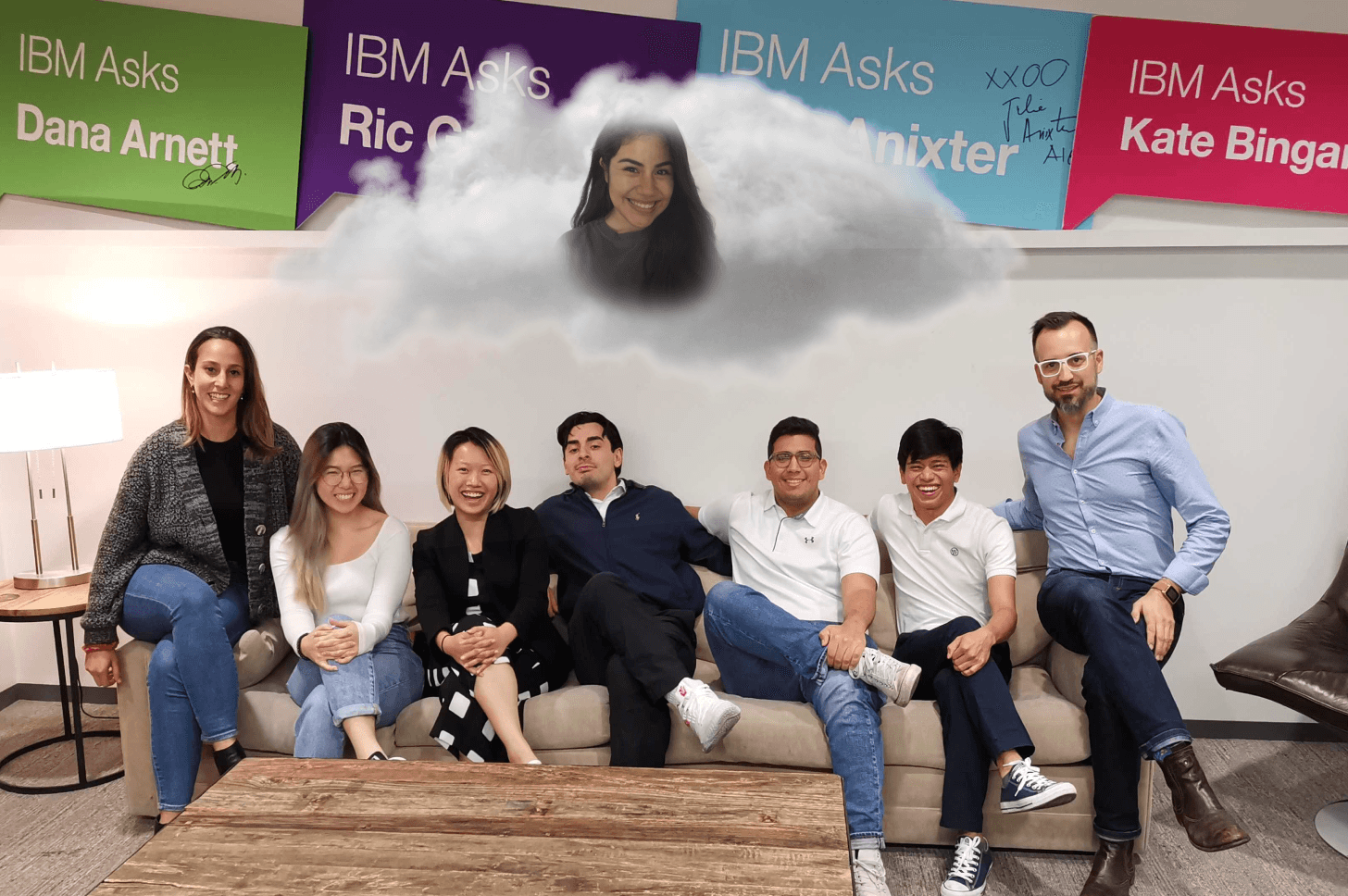

Thanks for stopping by!



Thanks for stopping by!
Let's connect?
Thanks for stopping by!
Let's connect?